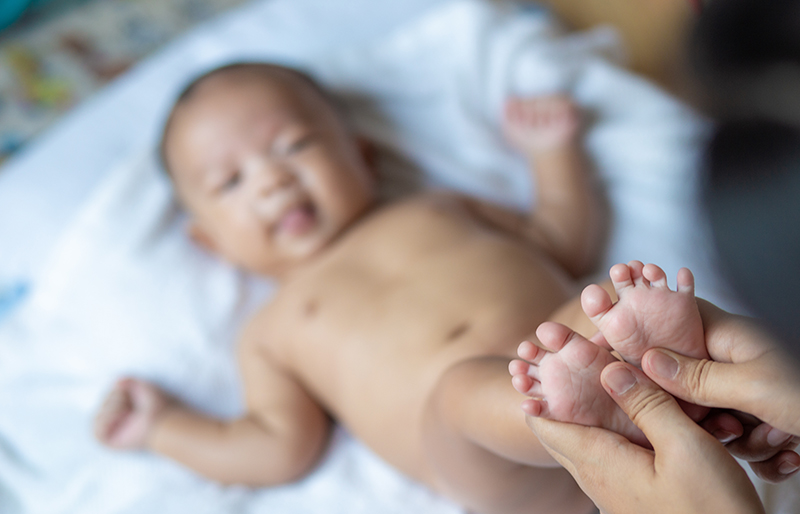
Osteopathy is a gentle treatment suitable for babies and children. Osteopaths utilise a range of techniques including stretching, massage and other gentle techniques such as cranial. Cranial techniques are safe, gentle and non-manipulative.
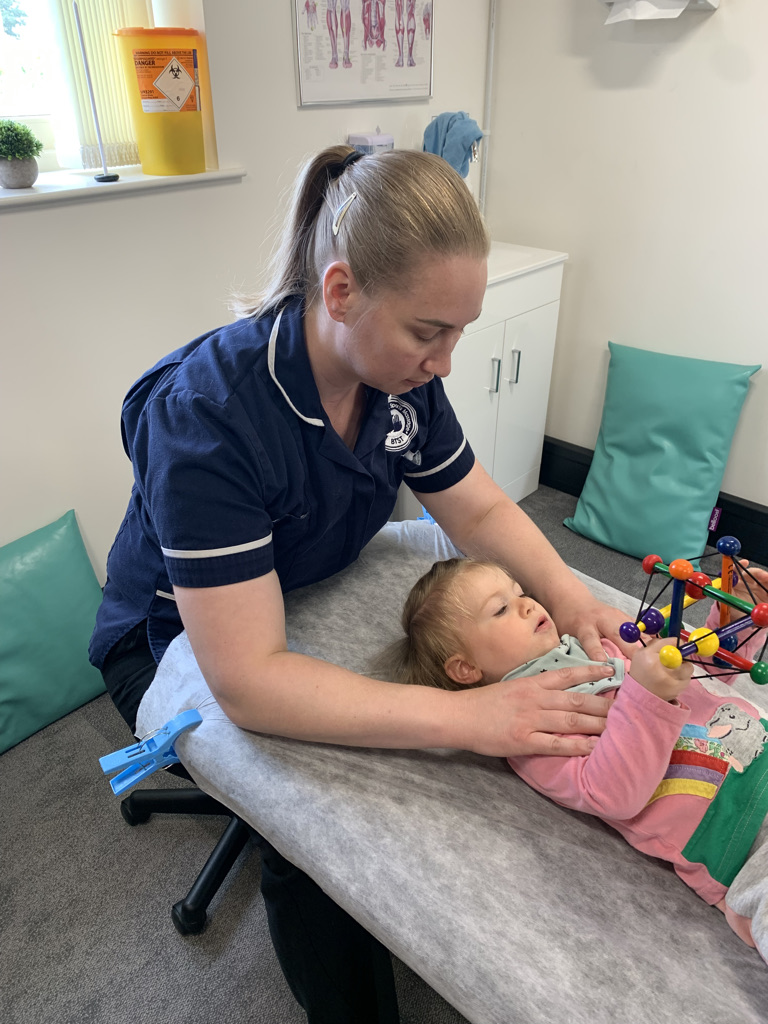
Following specialist post-graduate training, your osteopath will apply their hands to your baby’s head, back, stomach or other areas of the body. Small amounts of pressure are applied to restore ease in the tissues. Osteopaths work to assess a number of contributing factors to the symptoms and will therefore evaluate not only the area which is producing the symptoms, but also associated areas that may be contributing to the issue.
Conditions parents and guardians may seek treatment for their little one includes Colic, Reflex, Flat head, Arching back, Wind, Digestive problems, Torticollis, headaches, Musculoskeletal pain and much much more.
You do not need to consult your GP before you visit an osteopath, although you may wish to do so.
Initial Consultation and treatment Babies & toddlers (under 5 years) £65
Follow up treatment Babies & toddlers (under 5 years) £45
Initial Consultation and treatment children (5-17 years) £70
Follow up treatment Children (5-17years) £50
At your first visit, your osteopath will ask about your child’s symptoms and medical history. We treat all information as strictly confidential, in line with the standards set by the General Osteopathic Council and the General Data Protection Regulation (GDPR), May 2018.
It’s completely natural to feel concerned about your child’s symptoms. Your osteopath will carry out a thorough assessment and screen for any signs of more serious conditions. If needed, we will clearly explain the next steps and discuss any further action with you.
Before your appointment, we will ask you to complete a detailed questionnaire covering your pregnancy, labour, and your child’s medical history. During the session, your osteopath will gather any additional relevant information before examining your child.
In some cases, we may ask you to undress your baby or child to their nappy or underwear so we can assess movement properly. This is not always necessary and remains entirely your choice.
After the examination, your osteopath will explain the findings and discuss suitable treatment options. Together, you will agree on a personalised treatment plan and review the associated costs. Your plan may include several appointments and, in rare cases, further tests or referral to another healthcare professional.
Children under 18 must attend with a parent or guardian.
Osteopathic care is based on the individual needs of the patient and so varies depending on your age, fitness levels and diagnosis.
Osteopaths use a wide range of gentle hands-on techniques that focus on releasing tension, stretching muscles and mobilising joints. These are often used together with exercise and helpful advice designed to help relieve or manage pain, keep active and maintain the best of health.
Occasionally after the session your baby or child may appear slightly unsettled, this is a normal reaction to osteopathic treatment and often settles quickly. Your osteopath is always on hand to discuss any queries or concerns that you may have.
The health risks associated with having osteopathic treatment are extremely low. If you have any concerns about your treatment, we encourage you to raise them with your osteopath who will be happy to discuss them with you.
Please bring milk, finger foods, a favourite toy or dummy to entertain them during the session. It is possible to treat a baby whilst she or he is being fed.
In the UK, the General Osteopathic Council regulates the osteopathic profession. By law, every practising osteopath must register with the Council.
To stay registered, osteopaths must meet strict regulatory requirements and uphold high standards of professional practice. They also complete ongoing professional development to maintain and update their skills.
These regulations give patients the same level of protection and reassurance provided by doctors and dentists.
Osteopaths train to degree level, achieving either a Bachelor of Science (BSc) or an integrated Master of Osteopathy (MOst). Training takes a minimum of four years and includes more than 1,000 hours of supervised clinical experience with patients before registration.
NHS England recognises osteopaths as Allied Health Professionals. They play an important role in diagnosing, treating and supporting people of all ages.
We are members of the Institute of Osteopathy and the General Osteopathic Council GOSC, who are committed to the support and development of the osteopathic profession.
Membership of the Institute of Osteopathy affords assurances to the public, patients and colleagues, that we provide the highest quality service and care, exceeding the minimum requirements of professional regulation.
For more information on the Institute of Osteopathy, visit www.iOsteopathy.org or call 01582 488455
**All information was directly quoted from the Institute of Osteopathy https://www.iosteopathy.org/wp-content/uploads/2018/08/AboutOsteopathy-6pp-Aug-2018.pdf and includes references from www.nice.org.uk/guidance/NG59 **