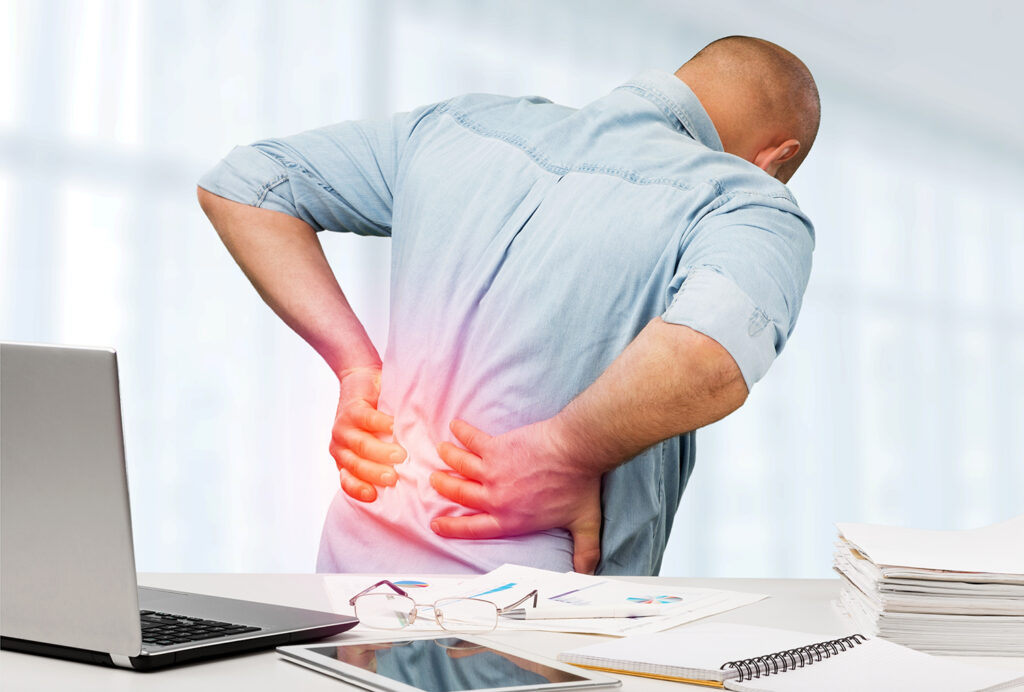
If you’ve ever experienced instant, debilitating back pain where your lower back locked up, you’ll know how painful and frightening it can be, especially if you don’t understand why it has happened.
A locked lower back can stop you moving, standing upright, or even taking a deep breath comfortably.
There are many reasons why your lower back may lock up, but in most cases it is a protective response by the body.
When the body senses irritation or injury in the spine or surrounding tissues, the back muscles go into spasm and contract to protect the area.
This protective muscle spasm helps prevent further damage, but it also causes:
While the spasm is protective, it can make everyday movement extremely difficult.
If your lower back locks up suddenly, the first step is to reduce tension and allow the muscles to calm down.
Try to get into a position where you feel the least amount of tension. This might mean lying down or sitting supported. The key is to avoid further guarding or tensing of the muscles.
Medication such as ibuprofen may help reduce pain and inflammation. Always follow medical guidance or consult a pharmacist or GP if unsure.
A cold flannel or cool compress can sometimes help calm the area.
Avoid very cold ice packs if they cause you to tense up further, and avoid heat early on if inflammation is present, as heat can sometimes aggravate the area in the early stages.
Once the initial spasm begins to ease and you can breathe more comfortably, gentle movement is helpful.
The body responds well to movement, and light activity can encourage the muscles to relax and promote healing.
Avoid forcing movements or stretching aggressively.
If your lower back has locked up, it’s a good idea to seek professional treatment after a couple of days.
A qualified practitioner can:
Early assessment can also ensure nothing more serious is contributing to the pain.
Although most episodes of lower back spasm improve, certain symptoms require urgent medical attention.
If you experience any of the following symptoms, you should go straight to A&E.
Altered sensation in the “saddle region.”
This is the area that would touch a saddle when sitting on a horse and includes:
Symptoms may include numbness, tingling, or weakness in this area.
Seek urgent medical help if you experience:
These symptoms require immediate medical assessment.
A locked lower back can be extremely painful, but in most cases it is the body’s protective response to irritation or injury.
Managing the initial spasm with rest, gentle movement, and appropriate care can help recovery, and seeking professional assessment can reduce the chances of it happening again.
Understanding the warning signs of serious spinal conditions is also important so you know when to seek urgent medical care.